
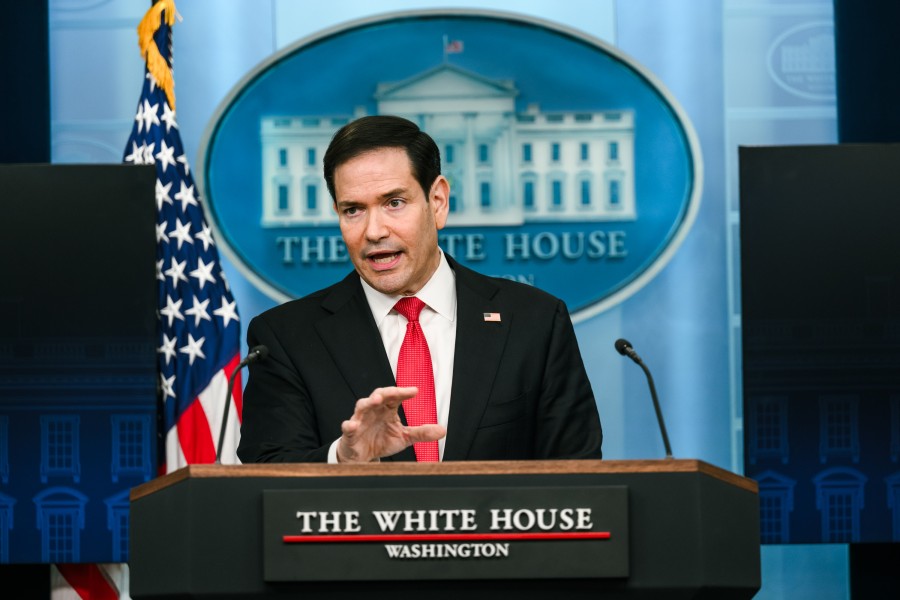
US Secretary of State Marco Rubio is currently engaged in discussions with Gulf allies regarding a proposed $300 billion Iran reconstruction fund. The initiative has sparked concerns among regional partners, who fear that the financial aid might enable Tehran to rebuild and enhance its military capabilities. The talks are part of Rubio’s diplomatic mission, which began with his arrival in Abu Dhabi, aiming to address various contentious issues that have arisen following a recent agreement meant to conclude the prolonged US-Israel conflict with Iran.
The proposed fund has become a central topic of contention among US allies. There is apprehension that the financial support could allow Iran to fortify its defense systems, a prospect that has not been well-received by neighboring Gulf countries. These nations are also uneasy about the agreement’s failure to tackle Iran’s ballistic missile program, which remains a significant security concern for the region.
Countries like the United Arab Emirates and Kuwait, which host key US military installations, have voiced their security concerns, especially in the wake of attacks endured during the conflict. They have been advocating for more robust assurances to prevent future threats. Rubio is addressing these concerns in his meetings with Gulf leaders, as he seeks to maintain backing for the agreement while simultaneously responding to criticisms from regional partners and some US lawmakers.
As Washington navigates the delicate balance of upholding the agreement and addressing the legitimate concerns of its Gulf allies, Rubio’s diplomatic mission underscores the complexity of regional security dynamics. Gulf leaders, who have supported efforts to terminate the conflict, remain wary of the agreement’s terms, highlighting the ongoing need for careful negotiation and strategic partnerships.