
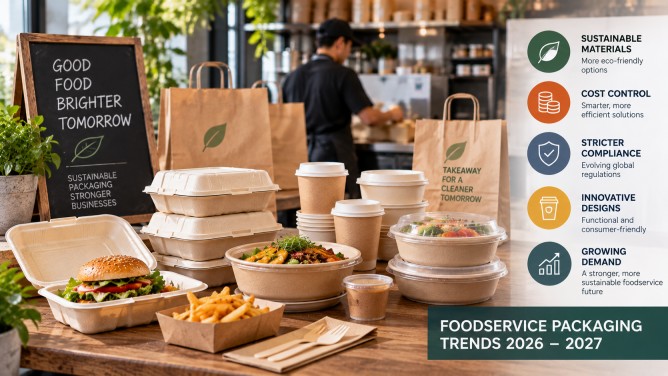
The foodservice packaging sector is witnessing a pivotal transformation as it heads toward 2026-2027, with a marked shift toward performance-driven, regulatory-compliant, and application-specific solutions designed for takeaway and delivery services. This evolution is steering restaurants, distributors, and food brands to prioritize sustainable packaging decisions that go beyond merely substituting plastic. The new focus is on evaluating packaging performance, total cost implications, and ensuring the veracity of product claims.
One significant trend is the growing demand for robust takeaway packaging capable of handling hot, oily, and moisture-rich foods. This demand is pushing the industry to adopt solutions such as molded sugarcane bagasse, which offers rigidity, fiber-based aesthetics, and practical performance. For more demanding applications, PFAS-free treatments and laminated structures are becoming essential. Testing packaging with actual menu items has become a standard practice for restaurants and distributors to ensure the right fit in terms of container size, barrier level, and lid design before committing to bulk purchases.
Cost control is another area undergoing transformation, as high-volume buyers are increasingly assessing total landed costs rather than focusing solely on unit prices. This comprehensive approach includes evaluating freight, warehousing, inventory expenses, and potential packaging failures. Factory-direct sourcing emerges as a strategy to gain better visibility into production planning and potentially reduce costs by bypassing intermediaries, especially in OEM/ODM programs that involve custom molds and branded packaging.
Compliance with regulations, particularly those concerning PFAS-free, compostable, and food-safe claims, is becoming more stringent, especially for businesses targeting European markets. The introduction of Regulation (EU) 2025/40 mandates specific PFAS concentration limits for food-contact packaging starting August 12, 2026. Consequently, buyers are urged to verify these regulatory requirements and procure documentation that aligns with the finished product’s claims. Additionally, the compostability of packaging should be examined at the finished-product level, considering all components like coatings and adhesives.
In this evolving landscape, manufacturers’ production capabilities and consistency in supply are under scrutiny by bulk buyers. Establishments like Grizzlies, with extensive production facilities and automation, exemplify the industry’s direction. Their capacity to handle OEM/ODM manufacturing, coupled with experience in quality control and application-specific solutions, positions them as a notable player in factory-direct bagasse food packaging. As the sector progresses, foodservice buyers are encouraged to rigorously define their packaging needs, test products under real-world conditions, compare total landed costs, and verify all necessary documentation to ensure compliance and performance.
Legal Disclaimer:
The information contained in this article has been provided by independent third-party contributors, clients, or content partners. We do not independently verify the accuracy, completeness, legality, ownership, licensing, or reliability of submitted content, including text, images, videos, trademarks, or other media materials. The submitting party is solely responsible for ensuring that all content, including images and media assets, complies with applicable copyright, trademark, licensing, and intellectual property laws. We disclaim liability for any unauthorized use of copyrighted or proprietary materials by third parties. If you believe that any content published on this platform infringes your intellectual property rights, kindly contact the author above for prompt review and resolution.