
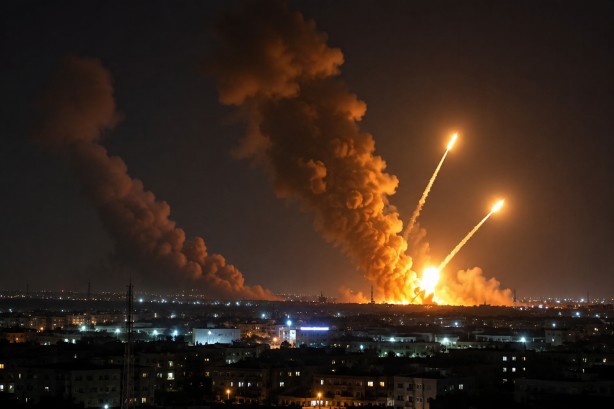
The United States has resumed military operations against Iranian targets, igniting concerns of an expanding conflict throughout the Middle East. This escalation follows a pause in hostilities and was triggered by Iran’s assault on a U.S. military base situated in Jordan, which houses American troops. President Donald Trump had previously cautioned that the United States would retaliate forcefully in response to Iran’s aggressive actions.
According to the U.S. Central Command, American forces executed a series of strikes over a two-hour window, targeting multiple sites associated with Iran’s Revolutionary Guard Corps. These targeted sites included military command centers, facilities for missiles and drones, and coastal defense and surveillance installations. In Iran, officials noted explosions on Qeshm Island near the strategically crucial Strait of Hormuz, as well as in Khuzestan province, with state media reporting that at least two individuals sustained injuries during these attacks.
This renewed military engagement comes on the heels of previous strikes against Iran-backed militias in Iraq, which reportedly resulted in the deaths of multiple fighters and Iranian advisers. The ongoing military actions have heightened fears that the conflict might spill over into a broader regional confrontation. Meanwhile, international mediators have struggled to revive negotiations between Washington and Tehran, with diplomatic efforts remaining at an impasse.
The escalation has also had a significant impact on global energy markets. Concerns over potential disruptions to oil supplies through critical Middle East shipping lanes have caused Brent crude oil prices to surge by more than 7%. This sharp increase reflects the market’s anxiety over the stability of oil flow amidst the heightened tensions.